Everything your smile needs, all under one roof. Click any service to learn more.
Routine examinations to monitor your oral health and catch issues before they become bigger problems.
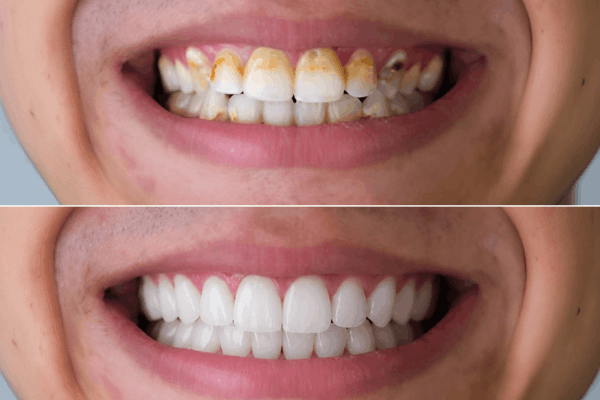
Learn moreDeep cleaning that removes tartar and plaque buildup that daily brushing simply cannot reach.
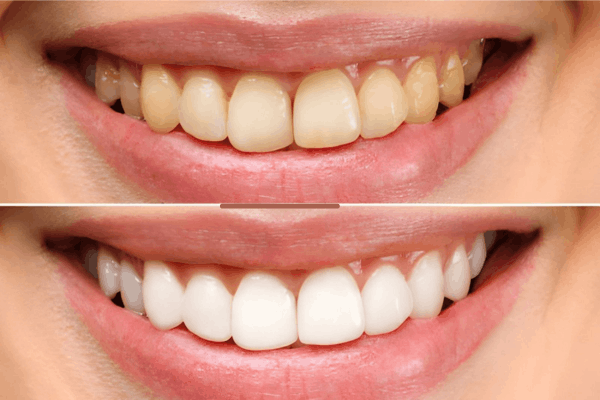
Learn moreProfessional whitening treatments that safely brighten your smile by several shades in a single session.
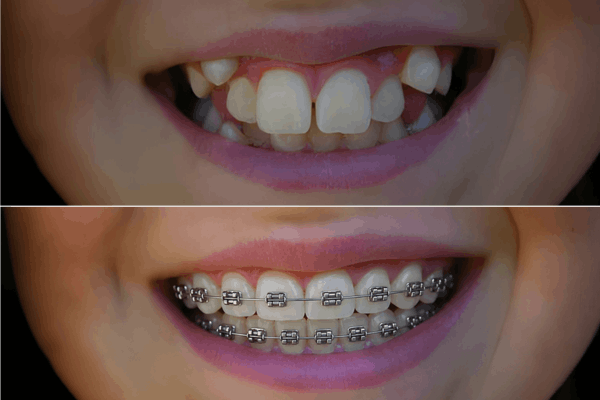
Learn moreStraighten your teeth with traditional braces or discreet clear aligners for teens and adults alike.
Learn moreRepair cavities with tooth-colored fillings that restore your tooth's strength and natural appearance.
Learn moreSave an infected or damaged tooth and relieve severe pain — modern root canals are far more comfortable than their reputation suggests.
Learn moreRestore damaged teeth or replace missing ones with custom-crafted restorations that look and feel natural.
Learn moreSafe, comfortable removal of severely damaged, infected, or crowded teeth to protect your overall oral health.
Learn moreThe gold standard for replacing missing teeth — a permanent, natural-feeling solution rooted directly in your jawbone.
Learn moreRoutine care that keeps your mouth healthy for life.
A dental checkup is a routine examination where your dentist assesses the overall health of your teeth, gums, and mouth. It typically includes a visual inspection and dental X-rays to catch any issues that aren't visible to the naked eye. Checkups are the single most effective way to prevent small problems from turning into costly, painful ones — and they take less than an hour.
Dental checkups are recommended for everyone — children, teens, adults, and seniors. Even if your teeth feel completely fine, underlying problems often develop without obvious symptoms. Gum disease in particular can progress silently for years before causing noticeable discomfort. Anyone who hasn't seen a dentist in over a year should schedule a checkup as soon as possible.
Every 6 months is the standard recommendation for most people. Some patients with higher risk factors — such as a history of gum disease or frequent cavities — may be advised to come in every 3 to 4 months. Your dentist will recommend the right schedule for you.
No. A standard dental checkup is painless. If your dentist finds an issue that needs treatment, they will discuss your options and ensure you are completely comfortable before proceeding with anything.
Don't panic — finding an issue early is always better than late. Your dentist will explain what was found, what it means, and what your treatment options are. Many problems caught during routine checkups are minor and straightforward to treat.
A deeper clean than brushing can ever achieve — and your gums will thank you for it.
A professional cleaning, also called dental prophylaxis, is a thorough cleaning of your teeth performed by a dental hygienist or dentist. It removes plaque and hardened tartar (calculus) that regular brushing and flossing at home cannot eliminate. No matter how diligently you care for your teeth at home, tartar naturally accumulates over time and can only be safely removed by a dental professional.
Professional cleaning is recommended for everyone, regardless of how well you brush and floss. Patients with early-stage gum disease may need more frequent cleanings — every 3 to 4 months instead of the standard 6. If you notice bleeding gums, persistent bad breath, or visible tartar buildup, you are especially due for a cleaning.
Home brushing and flossing remove soft plaque from tooth surfaces. Once plaque hardens into tartar — which happens within days — only a professional can safely remove it without damaging your enamel or gums.
Most professional cleanings take between 30 and 60 minutes, depending on how much buildup is present. If it has been a while since your last visit, it may take a bit longer during the first session.
Some mild bleeding can occur, especially if your gums are inflamed from tartar buildup or early gum disease. This typically improves as your gum health improves with regular cleanings. Persistent or heavy bleeding will be assessed by your dentist.
A brighter smile in a single visit — results that store-bought products simply cannot match.
Teeth whitening is a cosmetic dental treatment that uses a bleaching agent — typically hydrogen peroxide or carbamide peroxide — to lighten the color of your teeth. Professional whitening at a dental clinic delivers faster, more even, and longer-lasting results compared to over-the-counter strips or trays, because the concentration of the active ingredient is significantly higher and is applied with precision by a trained professional.
Teeth whitening is ideal for adults with healthy teeth and gums who are bothered by staining from food, drinks (coffee, tea, red wine), smoking, or natural aging. It is not recommended for pregnant women, patients with very sensitive teeth, those with active gum disease, or those with crowns and veneers on their front teeth (as whitening does not affect artificial materials). Your dentist will assess your suitability at the start of your visit.
Results typically last between 6 months and 2 years, depending on your diet and habits. Avoiding staining foods and drinks and maintaining good oral hygiene significantly helps prolong the results. Touch-up treatments are quick and affordable.
Some patients experience temporary sensitivity during or after treatment. This usually resolves within a day or two. Your dentist can apply a desensitizing treatment beforehand to minimize this, and will advise you if your teeth are too sensitive for whitening.
Whitening works best on natural tooth enamel. It has no effect on crowns, veneers, fillings, or bonding materials. Teeth with deep internal stains caused by certain medications or trauma may also respond differently. Your dentist will give you an honest assessment of your expected results.
Straight teeth, a better bite, and a confidence that lasts a lifetime.
Orthodontic treatment uses braces or clear aligners to gradually move teeth into their correct positions over time. It corrects issues such as crowded teeth, gaps, overbites, underbites, and crossbites — improving both the appearance and function of your smile. Beyond aesthetics, properly aligned teeth are easier to clean, reducing the long-term risk of cavities and gum disease.
Orthodontic treatment is suitable for children, teenagers, and adults. There is no upper age limit — teeth can be moved at any age, provided the teeth and supporting bone are healthy. Early treatment during childhood can take advantage of natural growth patterns, but many adults achieve excellent results as well. If you are self-conscious about crooked or crowded teeth, a consultation will show you what's possible.
Treatment duration varies from person to person, but most cases are completed within 12 to 24 months. Mild cases may be shorter; complex bite corrections may take longer. Your dentist will give you a realistic timeline at your consultation.
Traditional braces use metal or ceramic brackets bonded to your teeth and are generally more suitable for complex corrections. Clear aligners are removable, nearly invisible trays — more comfortable for many patients but require discipline to wear 20 to 22 hours per day to be effective.
There is some discomfort for a few days after each adjustment as teeth begin to move. This is normal and manageable with over-the-counter pain relief. The initial fitting and the adjustments themselves are not painful — just pressure.
Stop decay in its tracks — quickly, comfortably, and in a single visit.
A dental filling is a restorative treatment used to repair a tooth that has been damaged by decay (a cavity). The decayed portion of the tooth is removed and the resulting space is filled with a durable material to restore the tooth's shape, function, and strength. Today's tooth-colored composite fillings blend seamlessly with your natural teeth, making the repair virtually invisible.
Anyone with a cavity, regardless of its size, needs a filling. Even small cavities that aren't causing pain should be filled promptly — decay that is left untreated will grow larger, potentially requiring more extensive and costly treatment such as a crown or root canal. Patients who grind their teeth or have worn, cracked tooth surfaces may also benefit from restorative fillings.
The injection of local anesthetic may cause a brief pinch, but the filling procedure itself is painless. Once the numbness wears off (usually within a few hours), you may experience mild sensitivity — this is normal and typically resolves within a few days.
Composite resin fillings typically last 7 to 10 years with good oral hygiene. Your dentist will monitor your fillings at each checkup and let you know when one needs to be replaced. Avoiding habits like chewing ice or grinding teeth helps fillings last longer.
Untreated decay continues to spread through the tooth. If it reaches the inner pulp (nerve), you will likely experience significant pain and require a root canal treatment. If left even longer, the tooth may become unsalvageable and require extraction. A small filling today prevents all of that.
Save your tooth and end the pain — modern root canals are nothing to fear.
A root canal is a dental procedure that treats infection or severe damage inside a tooth. The soft inner tissue — called the dental pulp — is removed, the space is cleaned and disinfected, and the tooth is sealed. Despite its reputation, modern root canal treatment is no more uncomfortable than getting a filling. It relieves the severe pain caused by an infected tooth rather than causing it.
Root canal treatment is needed when the dental pulp becomes infected or inflamed — usually due to deep decay, a cracked tooth, or trauma. Symptoms may include a persistent toothache, sensitivity to hot and cold that lingers well after the stimulus is removed, swelling around the tooth, or a darkening of the tooth. In some cases there are no obvious symptoms, and the issue is discovered on a routine X-ray.
The procedure itself is not painful — local anesthesia ensures you feel comfortable throughout. Most patients are surprised at how manageable it is. Some soreness around the treated area for a day or two afterward is normal and easily managed with over-the-counter pain relief.
Most root canals are completed in one to two appointments. The second visit, if needed, is usually just to place the permanent crown over the treated tooth once it has settled.
The infection will not resolve on its own. It will continue to spread to surrounding teeth and the jawbone, and can become a serious health risk in severe cases. The tooth will also become increasingly painful and will eventually need to be extracted entirely.
Restore damaged teeth and replace missing ones — custom-made to look completely natural.
A dental crown is a custom-made cap that fits over an existing tooth to restore its shape, size, strength, and appearance. A dental bridge uses two crowns on either side of a gap — anchored to healthy teeth or implants — to hold a false tooth in place, bridging the space left by a missing tooth. Both restorations are fabricated to match the color and shape of your natural teeth so closely that they are virtually indistinguishable.
Crowns are recommended for teeth that are cracked, severely decayed, have had a root canal, or are too damaged to support a filling. Bridges are an excellent option for patients who are missing one or more consecutive teeth and have healthy teeth on either side of the gap. Patients who prefer not to undergo implant surgery often find a bridge to be the ideal solution.
With proper care and regular dental visits, crowns and bridges typically last between 10 and 15 years. Some last significantly longer. Avoid chewing on very hard items like ice or hard candy, which can crack the restoration.
Yes. Modern porcelain and ceramic restorations are crafted to closely match the shade and translucency of your natural teeth. Most people — including the patient — cannot tell them apart from natural teeth.
The preparation appointment uses local anesthesia, so the procedure is comfortable. Mild sensitivity around the tooth for a few days after is normal, especially while the temporary crown is in place. This resolves once the permanent restoration is fitted.
When a tooth needs to go, we make it as quick and comfortable as possible.
A tooth extraction is the removal of a tooth from its socket in the jawbone. While dentists always aim to save natural teeth whenever possible, extraction is sometimes the most appropriate course of action to protect your overall oral health. Modern techniques and anesthesia mean that most extractions are straightforward, well-tolerated procedures with a short recovery time.
Extraction is indicated when a tooth is too severely decayed or damaged to be saved with a filling or crown, when there is a persistent infection that has not responded to root canal treatment, when teeth are severely crowded ahead of orthodontic treatment, or when wisdom teeth are impacted and causing pain, crowding, or recurring infection. Your dentist will only recommend extraction when it is genuinely the best option for your long-term oral health.
No. Local anesthesia ensures the area is completely numb before any instruments are used. You may feel pressure and movement, but not sharp pain. If you feel anything uncomfortable during the procedure, tell your dentist immediately and they will address it.
Most simple extractions heal within 7 to 10 days. You will be advised to eat soft foods, avoid smoking, and avoid using a straw for the first few days to protect the blood clot that forms in the socket and allows it to heal properly.
Missing teeth can be replaced with a dental implant (the most natural-feeling permanent option), a dental bridge, or a removable partial denture. Your dentist will discuss which option best suits your situation, budget, and long-term goals at your follow-up.
The permanent, natural-feeling solution for missing teeth — designed to last a lifetime.
A dental implant is a permanent replacement for a missing tooth. A small titanium post is surgically inserted into the jawbone, where it fuses with the bone over several months through a process called osseointegration. Once healed, a custom-made crown is attached on top — creating a replacement tooth that looks, feels, and functions exactly like a natural one. Implants are widely regarded as the gold standard for tooth replacement.
Dental implants are suitable for adults who have one or more missing teeth and have sufficient bone density in the jaw to support the implant. Good general health is important, as the surgical site needs to heal properly. Patients who smoke face higher risk of implant failure and may be advised to quit before treatment. Those with certain conditions such as uncontrolled diabetes should discuss their suitability with the dentist during the consultation.
From the initial placement to the final crown, the process typically takes 4 to 8 months. Most of this time is the healing and osseointegration phase — the individual appointments themselves are relatively brief and straightforward.
The surgery is performed under local anesthesia, so it is comfortable throughout. Some swelling and soreness in the days after the procedure is normal and easily managed with prescribed or over-the-counter pain relief. Most patients are surprised by how manageable the recovery is.
Implants require the same care as natural teeth — brushing twice daily, flossing, and attending regular dental checkups. There are no special adhesives or cleaning solutions needed. With good oral hygiene and regular professional care, implants are designed to last a lifetime.
We believe every patient deserves expert care delivered with genuine warmth and honesty.
Our team takes time to listen, understand your concerns, and explain every step — so you always leave feeling confident and truly cared for.
We invest in modern dental technology to make your visit faster, more comfortable, and more accurate — from diagnostics to precision treatment tools.
Hundreds of smiles transformed and counting. Our patients' satisfaction and loyalty are the greatest proof of our commitment to quality care.
We're easy to reach — choose whichever way works best for you.